
Supreme Court
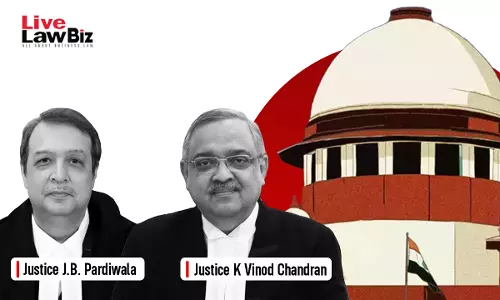
Excise Department Cannot Invoke Extended Limitation For Omission When Facts Were Already Known: Supreme Court
The Supreme Court on Thursday reiterated that the Excise Department cannot invoke the extended limitation period when the relevant facts were already known to it. The court set aside an excise duty demand after finding that the Department knew the manufacturer had cleared the chassis at 110% of its manufacturing cost.A Bench of Justices J.B. Pardiwala and K. Vinod Chandran, however, upheld the Department's position on valuation. It ruled that the additional 10% included in the valuation of the...
Xerox's 'Kitting' Of Imported Photocopier Modules Is Not 'Manufacture': Supreme Court Upholds CESTAT Ruling
The Supreme Court has held that Xerox India's practice of grouping, plugging and pinning imported photocopier modules according to customers' requirements, commonly known as "kitting", did not amount to "manufacture" under Section 2(f) of the Central Excise Act, 1944. As no manufacturing activity was found, the company was not liable to pay central excise duty. The court reiterated that a process amounts to manufacture only if it results in a new product with a distinct name, character, and...
Supreme Court Upholds Excise Duty On Pharmaceutical Samples Removed For Testing Over Record-Keeping Lapse
The Supreme Court has held that a taxpayer who fails to maintain the prescribed records for pharmaceutical samples removed for testing cannot avoid excise duty by contending that the goods had not attained marketability.It upheld the excise duty demand against Hicure Pharmaceuticals Pvt. Ltd.A bench of Justice K.V. Viswanathan and Justice Arun Palli applied its earlier decision in ITC Ltd. v. Collector of Central Excise to the facts of the case. Referring to that ruling, the bench observed, "It...
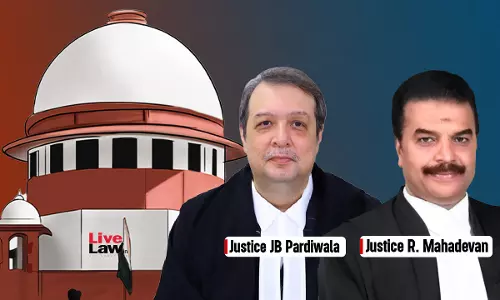
Supreme Court Holds Appeals On Excisability Of Goods Lie Before It, Not High Courts
The Supreme Court has recently held that disputes over whether goods are excisable fall within the exclusive appellate jurisdiction of the Supreme Court and cannot be decided by High Courts.Setting aside a Karnataka High Court judgment, the Court observed, "The provisions of Sections 35G and Section 35L, read together, always pointed to one and only one conclusion: that the question of excisability fell within the exclusive appellate jurisdiction of the Supreme Court." A Bench of Justice J.B....
Supreme Court Sets Aside Excise Demand On RCF, Says Exemption On Naphtha Depends On Intended Use
The Supreme Court has set aside central excise duty demands raised against Rashtriya Chemicals and Fertilizers Ltd over alleged wrongful availment of exemption on Naphtha procured for use in the manufacture of fertilizer, holding that in the facts of the case the benefit of the exemption notification could not be denied merely because the fuel was used in a common steam generation plant supplying different units of the factory.The case arose from a series of show cause notices issued over...

Supreme Court Grants Anticipatory Bail To Businessman Accused Of Supplying Bottles And Caps For Spurious Liquor
The Supreme Court on Tuesday granted anticipatory bail to a businessman accused of supplying plastic bottles, caps bearing government labels and cardboard boxes allegedly used for bottling spurious liquor. The Court noted that he was not initially named in the FIR and that no raid had been conducted at his place of business.A bench of Justices Prashant Kumar Mishra and N.V. Anjaria allowed the appeal filed by Manoj Kumar Mutta and set aside the Andhra Pradesh High Court's order dated December 5,...
Central Excise Exemption For Cotton Fabrics Not Available If Any Interlinked Process Uses Power : Supreme Court
The Supreme Court has held that manufacturers cannot claim central excise duty exemption for processed cotton fabrics if power is used at any stage of the manufacturing chain, even when the work is carried out through separate units. The Court restored a duty and penalty demand that had been set aside by the Customs, Excise and Service Tax Appellate Tribunal (CESTAT).To claim excise duty exemption for 'cotton fabrics' processed without the aid of power or steam, the manufacturing stages must be...
Externally Procured Parts Supplied To Customer For Assembly, But Not Used By Manufacturer, Aren't Liable To Excise Duty : Supreme Court
The Supreme Court on Monday (November 10) dismissed the Revenue Department's excise duty demand against a company that had manufactured and erected a large boiler at a customer's site, holding that the full contract value could not be subjected to central excise duty. The Court clarified that parts bought out externally and supplied to the customer for assembly, but not actually used by the manufacturer, would not attract excise duty. “we arrive at the finding that the final product that...
Supreme Court Issues Notice On Patanjali Foods' Rs 2.97 Crore Excise Duty Refund Appeal
The Supreme Court has recently issued notice in an appeal filed by Patanjali Foods Limited (formerly Ruchi Soya Industries Ltd.) seeking a refund of Rs 2.97 crore charged by the tax department in connection with an excise duty dispute. A Division Bench of Justice Pamidighantam Sri Narasimha and Justice Atul S Chandurkar issued notice on both the main appeal and the application seeking condonation of delay. The appeal challenges the Karnataka High Court's judgment dated September 30, 2024, and...
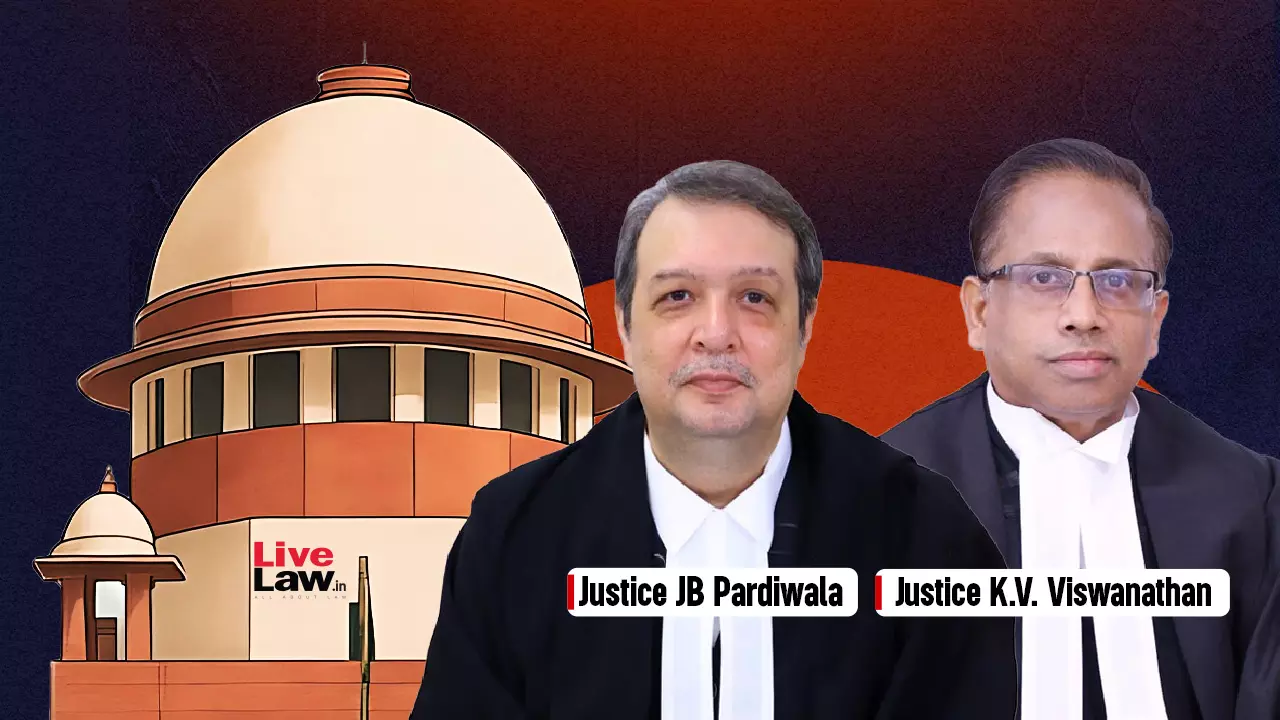
Converting Imported Goods Into Distinct, Marketable Products Qualifies As 'Manufacture'; Attracts Excise Duty: Supreme Court
The Court applied the tests laid down in precedents regarding 'manufacture'.
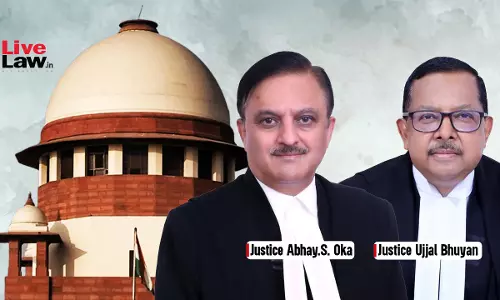
Central Excise Tariff Act | Test Reports Justifying Reclassification Must Be Disclosed to Manufacturer : Supreme Court
The Supreme Court ruled that when a test report forms the basis for reclassification of the petrochemical products, necessitating a higher duty, than the copy of such test reports ought to be furnished to the manufacturer-taxpayer. The bench of Justices Abhay S. Oka and Ujjal Bhuyan set aside the ₹2.15 crore central excise duty demand against M/s Oswal Petrochemicals Ltd., holding that the revenue authorities had violated principles of natural justice by failing to share key evidence—such as...
Supreme Court Sets Aside Excise Duty Demand On Oil Marketing Companies For Inter-Supply Of Petroleum Products
In a significant relief for Oil Marketing Companies (OMCs), the Supreme Court ruled (Jan. 20) that prices under the MoU for inter-supply of petroleum products, designed to ensure smooth nationwide distribution, do not constitute "transaction value" and are exempt from excise duty due to their non-commercial nature. The Court emphasised that the inter-supply arrangement was not solely price-driven but aimed at facilitating seamless distribution, rendering it ineligible for excise duty.Holding so,...